1

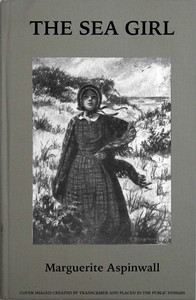
The sea girl — Background and Themes
(0 User reviews)
110
Project Gutenberg
2025
Not confirmed
Teenage girls -- Juvenile fiction; Nantucket (Mass.) -- Juvenile fiction; Clipper ships -- Juvenile fiction
Readers of public-domain and historical texts
Project Gutenberg digital edition
en
Edition facts
Words
54,231
Reading time
236 min
Text sections
5
The sea girl — Background and Themes can be approached with a clearer sense of reading commitment from its source measurements: 54,231 words, 3 hr 56 min estimated reading time, and 5 detected text sections.
The text analysis averages about 20.8 words per sentence, while the detected sections provide another way to judge how the source is divided.
Project Gutenberg metadata also associates the work with “Teenage girls -- Juvenile fiction,” connecting these edition facts with the source record’s subject description.
Source:
Project Gutenberg record #76490
In 1928's Nantucket clipper-ship tale, Erica Folger cuts her braids, longs for the sea, and receives a Chinese invitation. The excerpts show her rebellion, sensory October details, and a jade-keyed promise from Sun Li.
Editorial Edition Score
4.7/5
★★★★★
★★★★★
Calculated from edition completeness, EPUB availability, text structure and catalogue metadata. Not a user rating.
How this score is calculated
- Description quality20 pts
- Title & short description10 pts
- Source metadata20 pts
- Text length15 pts
- Chapters / structure15 pts
- EPUB file integrity20 pts
Total of 100 points, scaled to a 2.5-5.0 range. Editions with an empty description or a missing EPUB file are not scored.
Edition quality
Public-domain source text
Read the source text
The source text is kept in the dedicated reader, separate from this catalogue record and its commentary.
The opening chapter of The Sea Girl introduces Erica Folger perched on a Nantucket roof walk, having just cut off her two thick braids with Aunt Charity's shears. The October air carries salt, sweet-fern, and bayberry; the water is very blue. Erica's act of vandalism, as her aunt would call it, is presented without apology—she stares critically at her own reflection, feeling no regrets. The narrative voice blends crisp sensory detail with the girl's determined ambition: she loves the alive feeling October puts into her fingers and toes. This specific setting—a shabby gray house on Orange Street overlooking the harbor—grounds the story in a particular time and place, eighty years before the Civil War, when Nantucket was still a clipper-ship port.
A Self-Made Bob and a Roof-Top Rebellion
The first chapter establishes Erica's character through a single, decisive action: she cuts her own hair. The narrator notes she had no known precedent to guide her, making her bob a thoroughly modern act for the 1840s. The shears belong to Aunt Charity, and the two braids lie on the walk, tied with demure black bows. Erica expects disapproval but feels no regret. This small rebellion is not explained or justified; it is simply performed. The roof walk itself—a flat, railed platform astride the sloping roof—becomes a private space where Erica can observe the harbor and think her own thoughts. The contrast between the orderly house below and the exposed perch above mirrors the tension between domestic expectations and Erica's desire for the sea.
October on Nantucket: A World of Salt and Sedge
The narrative lingers on the physical sensations of autumn: the clean tang of sea salt, the fragrance of sweet-fern and bayberry, the riot of orange sedge and turning huckleberry on Pest-house Shore. Erica decides each year that October is the best month, loving the snap and vigor of the crisp, sweet air. These details do more than set a scene—they root Erica's character in a specific, sensory relationship with her island home. The description is precise: the commons across the harbor are unromantically named, yet the colors are vivid. The narrator's voice shares Erica's appreciation without sentimentality. This attention to place suggests that Nantucket itself is a character, one that both confines and inspires the girl who longs to leave it.
A Silver Key and a Chinese Invitation
Later in the excerpts, Erica's brother Lis delivers a message from old Sun Li, a Chinese merchant who calls Erica the little Sea Girl. He sends a teak-wood box containing a thin silver key banded with carved jade, the key to rooms in his palace that have been waiting for her for years. The invitation is for Erica and her father to visit China aboard the Sea Gull. Lis cannot repeat the message word for word—it was too high-flown and Chinese—but the gist is clear: Sun Li associates Erica with his dead son, born on the same day. The key is a tangible promise, a plot device that transforms Erica's longing into a concrete possibility. The scene is domestic—breakfast, hot biscuits, a grate fire—but the object from across the world introduces an exotic, adult adventure into the girl's Nantucket world.
Readers should attend to the way Aspinwall uses objects—the shears, the braids, the silver key—to mark Erica's transitions between childhood and the wider world. The excerpts offer no resolution; they only set the stage. The tension between Erica's rebellious act and the formal invitation suggests that her journey will be both literal and social. The story's pleasure lies in its specific, unhurried attention to place and gesture, not in dramatic action.
October damp on the porch today—that’s what Erica’s braid-cutting brings back. I once hid a similar longing inside a borrowed anthology, and that same quiet ache surfaced in A crown of straw — Reading Companion, where a straw spine bent under its own promise. Both felt like jade keys turning something I hadn’t named yet.
There are no reviews for this eBook.
There are no comments for this eBook.
Reader reflection
Record your reading impressions
A brief reflection can help important ideas stay with you longer.
Your progress
0
/
10
2
Did this book hold your interest?
3
How likely are you to recommend this book?
4
How demanding did the text feel?
5
How clear did the writing feel?
6
Would you like to discuss this book with someone?
7
How original did the book feel?
8
How strong was your personal connection to the text?
9
Which lesson or insight stayed with you?
10