1

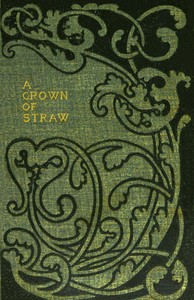
A crown of straw — Reading Companion
(0 User reviews)
1856
Project Gutenberg
2024
Not confirmed
Germany -- Fiction; Political fiction; Social classes -- Fiction; Man-woman relationships -- Fiction; Kings and rulers -- Fiction; Socialists -- Fiction
Readers of public-domain and historical texts
Project Gutenberg digital edition
en
Edition facts
Words
83,270
Reading time
363 min
Text sections
29
Before opening A crown of straw — Reading Companion, the edition data offers a quick orientation: 83,270 words, 6 hr 3 min estimated reading time, and 29 detected text sections.
The text analysis averages about 16.5 words per sentence, while the detected sections provide another way to judge how the source is divided.
Project Gutenberg metadata also associates the work with “Germany -- Fiction,” connecting these edition facts with the source record’s subject description.
Source:
Project Gutenberg record #73325
Allen Upward's 1896 novel embeds political intrigue and class tension in a fictional German kingdom, where a peasant girl's arrival at court exposes the fragile alliances between a socialist-leaning king, a scheming princess, and a cautious chancellor.
Editorial Edition Score
4.9/5
★★★★★
★★★★★
Calculated from edition completeness, EPUB availability, text structure and catalogue metadata. Not a user rating.
How this score is calculated
- Description quality20 pts
- Title & short description10 pts
- Source metadata20 pts
- Text length15 pts
- Chapters / structure15 pts
- EPUB file integrity20 pts
Total of 100 points, scaled to a 2.5-5.0 range. Editions with an empty description or a missing EPUB file are not scored.
Edition quality
Public-domain source text
Read the source text
The source text is kept in the dedicated reader, separate from this catalogue record and its commentary.
Allen Upward's preface to A Crown of Straw announces his ambition to capture 'the romance of contemporary history,' arguing that the present age holds as much poetry as any past era. The novel, set in the fictional kingdom of Franconia, tests this claim by weaving a story of court politics, class conflict, and personal ambition. The excerpts reveal a narrative built on sharp dialogue and strategic silences: Princess Hermengarde maneuvers to control perceptions, the Chancellor Count hedges his words, and the king's socialist friend, Herr Mark, hovers as an offstage threat. Upward's characters speak in layers, each line carrying a tactical weight that invites the reader to read between the speeches.
The Art of the Political Aside
Upward's dialogue operates as a chess game of implication. When Princess Hermengarde remarks to the Chancellor, 'You are not looking quite yourself to-day,' the surface concern masks a probe about the king's socialist friend. The Chancellor's cautious reply—'I am happy to say that his Majesty and I understand each other'—reveals more by what it omits than by what it states. The narrator notes that Hermengarde 'permitted a smile of scorn to show itself for one moment,' a gesture that undercuts the Chancellor's optimism. These exchanges are not mere exposition; they are the novel's primary engine, advancing the plot through veiled threats and calculated revelations. The reader is placed in the position of a court observer, parsing each remark for its subtext.
The Changeling and the Peasant Girl
Two characters disrupt the court's equilibrium: Prince Ernest, whom his mother privately calls 'The Changeling' because he defies her molding, and Dorothea, the peasant girl installed in the palace. The prince's preference for Dorothea 'taxed all his mother's resources to keep up the fiction of an intimacy between Gertrude and the Prince.' The phrase 'fiction of an intimacy' underscores the performative nature of court relationships. Dorothea herself is largely silent in the excerpts, yet her presence catalyzes conflict. The Chancellor views her arrival as 'equally embarrassing' to the princess's schemes, while Hermengarde reframes it as a strategic move to force the king's affair into public view. The peasant girl becomes a mirror reflecting the court's anxieties about class, power, and legitimacy.
The Weight of Unspoken History
Upward's narrative economy relies on what is not said. The excerpts hint at 'former relations between the Lady von Sigismark and Maximilian' without elaboration, leaving the reader to infer past entanglements. Similarly, the king's socialist friend, Herr Mark, is discussed but never appears in the provided text, his influence felt only through the Chancellor's evasions. This technique creates a sense of depth, as if the story extends beyond the page. The preface's defense of 'contemporary history' suggests that Upward intends these gaps to mirror real political opacity—where decisions are made in corridors, not in open debate. Readers must attend to these silences as closely as the spoken words, piecing together the alliances and enmities that drive the plot.
Upward's novel rewards attention to the spaces between speeches. The excerpts offer no resolution to the tensions they introduce—the king's intentions, the peasant girl's fate, the chancellor's loyalty—but they establish a world where every gesture carries political weight. Readers should watch for the recurrence of the 'crown of straw' motif, which the preface hints at as a symbol of ambition's fragility. The story unfolds not through grand declarations but through the accumulation of small, strategic moves.
Reading about the peasant girl at that brittle court, I remembered my grandmother’s kitchen, where class meant the difference between sugar and honey. That same ache of silent, unequal watching came back to me in A Horse's Tale — Inside the Classic, where a creature’s loyalty quietly measures the world’s cruelties. Both books feel like holding a warm stone on a cold evening.
There are no reviews for this eBook.
There are no comments for this eBook.
Reader reflection
Before you leave, reflect on the book
Use these questions to collect your thoughts before moving on.
Your progress
0
/
10
2
Did this book hold your interest?
3
Is this a title you would suggest to others?
4
Did the language feel accessible?
5
Was the book what you thought it would be?
6
Which aspect of the book did you value most?
7
What was its emotional impact?
8
Would you read this book again?
9
What did this book teach you most?
10