1

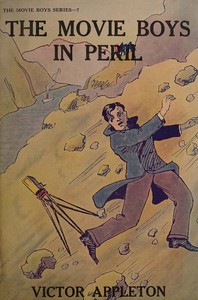
The movie boys in peril — Context and Discussion
(0 User reviews)
1131
Project Gutenberg
2025
Not confirmed
Adventure and adventurers -- Juvenile fiction; Motion pictures -- Production and direction -- Juvenile fiction; Panama Canal (Panama) -- History -- Juvenile fiction
Readers of public-domain and historical texts
Project Gutenberg digital edition
en
Edition facts
Words
48,162
Reading time
210 min
Text sections
32
This digital edition of The movie boys in peril — Context and Discussion is described by source-level measurements including 48,162 words, 3 hr 30 min estimated reading time, and 32 detected text sections.
The text analysis averages about 14.0 words per sentence, while the detected sections provide another way to judge how the source is divided.
Project Gutenberg metadata also associates the work with “Adventure and adventurers -- Juvenile fiction,” connecting these edition facts with the source record’s subject description.
Source:
Project Gutenberg record #76378
This editorial note examines how the opening, middle, and later excerpts of Victor Appleton's 1915 adventure serial guide a first reading, focusing on the motor-cycle introduction, the Gatun Dam discussion, and the jungle launch sequence.
Editorial Edition Score
4.8/5
★★★★★
★★★★★
Calculated from edition completeness, EPUB availability, text structure and catalogue metadata. Not a user rating.
How this score is calculated
- Description quality20 pts
- Title & short description10 pts
- Source metadata20 pts
- Text length15 pts
- Chapters / structure15 pts
- EPUB file integrity20 pts
Total of 100 points, scaled to a 2.5-5.0 range. Editions with an empty description or a missing EPUB file are not scored.
Edition quality
Public-domain source text
Read the source text
The source text is kept in the dedicated reader, separate from this catalogue record and its commentary.
The story begins not with the Panama Canal but with a motor cycle ride to a farmhouse, where Blake and Joe trade banter about missing mail and a girl named Mabel. The opening establishes their easy camaraderie and a shared history of filming flood disasters. The motor cycle, described as a “steed of steel and gasoline,” signals the boys’ comfort with modern machinery—a trait that will serve them well in the Canal Zone. The casual mention of Mr. Hadley and the promise of a new assignment sets the plot in motion without revealing the destination. Readers are drawn into a world where adventure is routine and the next job is always just around the corner.
A Motor-Cycle Prologue
The first chapter introduces the protagonists through action rather than description. Blake and Joe are defined by their dialogue: Blake’s confidence (“She’ll do better than ninety miles an hour on the level”) contrasts with Joe’s more cautious, romantic nature (his blush at Mabel’s name). The motor cycle itself is a character—its “puffs and chugs” and “twin cylinders” ground the story in the technology of 1915. The boys’ concern over missing mail hints at a dependence on external direction, a theme that recurs as they later rely on Captain Watson and Mr. Alcando for guidance. This opening efficiently establishes the series’ formula: two resourceful friends, a vehicle, and a looming assignment.
The Gatun Dam Dialogue
In the middle excerpt, the setting shifts to the Panama Canal, where the boys film the Gatun Dam. Captain Watson explains that the dam could be destroyed only by dynamite, not by natural forces. This technical discussion serves multiple purposes: it educates the reader about the canal’s engineering, raises the stakes for the plot, and introduces the villainous possibility of sabotage. Mr. Alcando, a Spaniard learning filmmaking from the boys, muses that a dam explosion would make “a wonderful picture.” Blake and Joe react with gravity, calling it “a terrible crime against civilization.” The contrast between Alcando’s aesthetic interest and the boys’ moral seriousness hints at his potential unreliability. The scene uses dialogue to advance both the setting and character dynamics.
Into the Jungle by Launch
The later excerpt shows the boys preparing to enter the jungle via a small launch, heading up the Chagres River. The captain offers to drop them at the river’s mouth, and they agree, seeking “fine pictures” to complement their canal footage. This transition from the man-made canal to the natural jungle mirrors the story’s movement from civilization to wilderness. The launch replaces the motor cycle as the vehicle of adventure, and the boys’ cameras remain their primary tools. The phrase “stops having been made to permit the boys to film certain scenes” suggests a methodical approach to their work, contrasting with the impulsive motor-cycle ride of the opening. The jungle setting promises new dangers and opportunities for the “strenuous days” promised in the subtitle.
Voice and Structure Across Excerpts
The excerpts reveal a consistent narrative voice: third-person limited, closely following Blake and Joe. Dialogue carries much of the exposition, with characters explaining the canal’s features or their own motives. The prose is brisk and action-oriented, with short paragraphs and frequent line breaks. The story’s structure alternates between travel sequences and stationary conversations, each advancing the plot or deepening the setting. The opening’s domestic farmhouse gives way to the monumental canal, then to the untamed jungle—a geographical arc that mirrors the boys’ growing peril. The author, Victor Appleton, uses the series formula to blend education (canal engineering) with adventure (potential sabotage), making the excerpts a reliable guide to the book’s dual focus.
Readers approaching this book for the first time should pay attention to how the boys’ equipment—motor cycle, cameras, launch—shapes their interactions with the world. The excerpts suggest that technology is both a tool and a source of vulnerability. The dialogue about dynamite and the dam foreshadows a central conflict, while the jungle launch signals a shift to less controlled environments. The story rewards attention to mechanical details and offhand remarks, as these often carry plot significance. Enjoy the ride.
Years at the reference desk taught me that The Movie Boys in Peril, with its steady pace along Panama’s waterways, shares something quiet with Jibby Jones — Reading Companion. Both hold a boy’s slow awakening to the world’s machinery—not loud adventure, but patient noticing. I often shelved them together, recognizing kin. Their kinship whispers.
There are no reviews for this eBook.
There are no comments for this eBook.
Reader reflection
Take a moment to reflect on this book
Create a short personal record of your experience with this book.
Your progress
0
/
10
2
Did this book hold your interest?
3
Is this a title you would suggest to others?
4
How easy was the book to follow?
5
Did the book deliver what you hoped for?
6
Did any part of the book stay with you emotionally?
7
How useful were the ideas in this book?
8
Was the book easy to understand?
9
Which lesson or insight stayed with you?
10