1

Jibby Jones — Reading Companion
(0 User reviews)
1365
Project Gutenberg
2025
Not confirmed
Boys -- Juvenile fiction; Adventure and adventurers -- Juvenile fiction; Mississippi River -- Juvenile fiction
Readers of public-domain and historical texts
Project Gutenberg digital edition
en
Edition facts
Words
72,346
Reading time
315 min
Text sections
7
For Jibby Jones — Reading Companion, the stored edition analysis reports 72,346 words, 5 hr 15 min estimated reading time, and 7 detected text sections.
The text analysis averages about 16.0 words per sentence, while the detected sections provide another way to judge how the source is divided.
Project Gutenberg metadata also associates the work with “Boys -- Juvenile fiction,” connecting these edition facts with the source record’s subject description.
Source:
Project Gutenberg record #76547
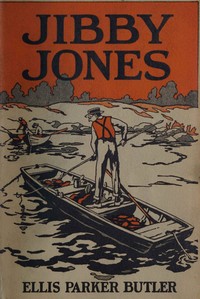
Ellis Parker Butler's 1923 boys' adventure follows Jibby Jones and his Riverbank friends as they dig a worm mine, discover a supposed Viking ship that turns out to be a molasses barrel, and navigate Mississippi River lore. The narrative voice is colloquial and self-aware, with humor arising from the gap between grand schemes and mundane realities.
Editorial Edition Score
4.7/5
★★★★★
★★★★★
Calculated from edition completeness, EPUB availability, text structure and catalogue metadata. Not a user rating.
How this score is calculated
- Description quality20 pts
- Title & short description10 pts
- Source metadata20 pts
- Text length15 pts
- Chapters / structure15 pts
- EPUB file integrity20 pts
Total of 100 points, scaled to a 2.5-5.0 range. Editions with an empty description or a missing EPUB file are not scored.
Edition quality
Public-domain source text
Read the source text
The source text is kept in the dedicated reader, separate from this catalogue record and its commentary.
The narrator of Jibby Jones introduces himself and his friends with a casual, knowing tone that immediately distinguishes the book from earnest adventure tales. “Everybody knows that the Mississippi River is just about the biggest river in the world,” he begins, then undercuts the boast by noting that when a boy wants to go swimming, he thinks about swimming, not geography. This self-mocking voice—proud of the river but aware of how boys actually talk—sets the pattern for the whole story. The boys form a club, dig a worm mine, and imagine themselves as entrepreneurs, but their grand plans keep colliding with practical problems: flooding, sand streaks, and a buried object that turns out to be a molasses barrel, not a Viking ship. The humor comes from the gap between their romantic ideas and the messy, sticky reality.
A Narrator Who Knows He’s Telling a Story
The unnamed first-person narrator speaks directly to the reader with a conversational ease that feels like a boy telling a long, rambling tale. He explains why the Riverbank boys don’t brag about the Mississippi to each other (“it doesn’t do me any good to brag about the river to Tad Willing or Skippy Root or Wampus Smale, because they know as much about it as I do”) and why they gave up putting signatures on their worm-mining labels. These asides reveal a narrator who is both part of the action and slightly detached, amused by his own group’s schemes. The voice is consistently colloquial—using phrases like “you bet they were excited” and “sort of raised up”—and it never strains for literary effect. This casual intimacy is the book’s chief stylistic feature, making even mundane details feel like shared secrets.
The Worm Mine: Enterprise Meets Geology
The boys’ central project is a worm mine on Birch Island, where they dig for “worm ore” to sell as fishing bait. The enterprise is described with mock-serious business language: they timber the gallery, carry out dirt, and refine the worms. But the real tension is between their entrepreneurial enthusiasm and the stubborn facts of the island’s geology. Jibby Jones, the quietest of the group, is the one who worries about flooding: “It is these streaks of sand we have run into here and there. The whole island won’t have to be flooded to flood our mine; as soon as the water in the river rises a little, it will begin to seep through that sand.” This practical worry—voiced in plain, specific terms—contrasts with the others’ grand visions. The mine is a perfect microcosm of the book’s pattern: ambitious plans, then a deflating but funny discovery (a barrel of molasses, not a Viking ship). The humor is gentle, never mean, and the boys’ resilience is part of the point.
Mississippi River as Setting and Character
The river is more than a backdrop; it shapes the boys’ lives and their stories. The narrator estimates that Riverbank sits near the middle of the Mississippi, with “pretty near a thousand miles of it above Riverbank and more than a thousand miles of it below.” This sense of being at the center of something vast gives the boys’ adventures a local, grounded feel. They swim, fish, and row boats in “the biggest river in the world,” but they don’t dwell on its grandeur. The river’s physical reality intrudes in practical ways: flooding threatens the mine, and the buried barrel is a relic of the river’s history. The boys’ knowledge of the river is experiential, not geographical. When they find the oak barrel bound with iron, Tad immediately imagines a Viking ship, but Jibby’s skeptical response—“I never heard of viking ships sailing up the Mississippi”—shows a mind that tests romantic ideas against common sense. The river, like the narrator’s voice, keeps the story anchored in the tangible.
The excerpts offer a clear picture of the book’s tone and structure, but they do not reveal the full arc of the plot. Readers should expect a series of episodic adventures, each built around a scheme that goes amusingly wrong, held together by the narrator’s consistent voice and the boys’ camaraderie. The humor is dry and affectionate, and the Mississippi setting provides both a playground and a source of gentle obstacles. Pay attention to how Jibby’s quiet practicality balances the group’s enthusiasm—it is the key to the story’s comic rhythm.
That gray afternoon, Jibby’s worm mine collapsing into a molasses barrel felt less like failure and more like a shrug of the river’s shoulders. It made me think of old epics, grand promises stirring in the mud. Later, I found The Persian Literature, Comprising The Shah Nameh, The Rubaiyat, The Divan, and The Gulistan, Volume 2 — Inside the Classic on a low shelf, its gold letters dull with rain, and simply opened it without expectation.
There are no reviews for this eBook.
There are no comments for this eBook.
Reader reflection
What was your reading experience?
Capture what you thought, learned, and would like to remember.
Your progress
0
/
10
2
How did the book work for you overall?
3
How likely are you to recommend this book?
4
What was the reading difficulty like?
5
Is this a title worth rereading?
6
Did the book meet your expectations?
7
What was its emotional impact?
8
How valuable was this book for your own interests?
9
In one sentence, what did you learn?
10