1

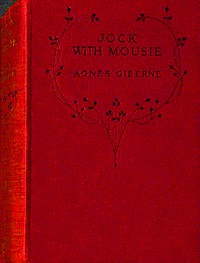
Jock with Mousie — Context and Discussion
(0 User reviews)
120
Project Gutenberg
2025
Not confirmed
Children -- Conduct of life -- Juvenile fiction; Friendship in children -- Juvenile fiction; Boys -- Family relationships -- Juvenile fiction
Readers of public-domain and historical texts
Project Gutenberg digital edition
en
Edition facts
Words
31,487
Reading time
137 min
Text sections
4
The source record for Jock with Mousie — Context and Discussion measures this digital text at 31,487 words, 2 hr 17 min estimated reading time, and 4 detected text sections.
The text analysis averages about 12.1 words per sentence, while the detected sections provide another way to judge how the source is divided.
Project Gutenberg metadata also associates the work with “Children -- Conduct of life -- Juvenile fiction,” connecting these edition facts with the source record’s subject description.
Source:
Project Gutenberg record #76826
Agnes Giberne's 1928 children's novel follows young Jock, sent to live with strict Aunt Judith and his cousin Mousie after his mother's illness. The opening firelight scene establishes Jock's restless curiosity, while later excerpts show his struggle with truth-telling and earning trust. The story balances Jock's inner world with the demands of a new household.
Editorial Edition Score
4.6/5
★★★★★
★★★★★
Calculated from edition completeness, EPUB availability, text structure and catalogue metadata. Not a user rating.
How this score is calculated
- Description quality20 pts
- Title & short description10 pts
- Source metadata20 pts
- Text length15 pts
- Chapters / structure15 pts
- EPUB file integrity20 pts
Total of 100 points, scaled to a 2.5-5.0 range. Editions with an empty description or a missing EPUB file are not scored.
Edition quality
Public-domain source text
Read the source text
The source text is kept in the dedicated reader, separate from this catalogue record and its commentary.
The novel begins not with action but with a boy alone in firelight. Jock sits on a square stool, nursing his right leg and staring into the flames, wondering why some are green and others red, why coal burns, and why grown-ups sleep during the day. This quiet opening establishes his observant, questioning nature and his longing for his mother's attention. The room is dim, with a blue carpet and pictures on the walls; Jock's shadow dances as he sways. The prose stays close to his perspective, recording his unspoken thoughts and his struggle to remain silent for a whole quarter of an hour. This is a story that will unfold through small domestic moments and internal conflict rather than grand adventures.
A Boy's Inner World
The opening chapter reveals Jock's character through his fascination with the fire and his frustration at his mother's silence. He is bursting with ideas but must wait. The narrative voice is close to Jock, noting how he finds nights too long and days too short because there is always so much to do. His mother is described as 'the dearest of mothers,' and we learn his father is in India with his regiment. The scene is entirely interior, focused on Jock's thoughts and the firelight's shifting shapes. This establishes a pattern: the story will prioritize Jock's emotional experience over external plot. The reader is invited into his mind, where questions about flames and shadows mingle with a child's impatience and love.
Trust and Its Breaking
A later excerpt shows a crisis: Aunt Judith tells Jock she cannot trust him, accusing him of lying. Jock's reaction is visceral—he 'crimsoned' and later huddles in a window-seat, feeling his courage at an end. The accusation stings because it touches his sense of honor. He thinks of Captain Royle's advice to bear punishment like a man, but concludes that no man could take this punishment nicely. The scene is tense and quiet, driven by dialogue and Jock's internal turmoil. Aunt Judith is not portrayed as cruel but as unhappy; she says Jock has brought it on himself. This moment crystallizes a central conflict: Jock must navigate between his own sense of right and the judgments of adults. The reader sees his hurt and his stubborn refusal to cry.
Comfort and Complication
Grannie's entrance shifts the tone. She slips in softly, her silk gown swishing, and offers comfort without condoning. Jock clings to her, still determined not to cry, but his whole frame heaves with the effort. Grannie's dialogue is gentle and coaxing: she suggests Jock may have made a mistake, reminds him that everyone makes mistakes, and urges him not to go to bed angry. Jock's response—'P'raps I'd better stay up, Grannie'—shows his literal-mindedness and his attempt to negotiate. Grannie gently redirects him, quoting the Bible about not letting the sun go down on wrath. This scene illustrates the novel's moral framework: wrongdoing is acknowledged, but forgiveness and reconciliation are emphasized. Jock's relationship with Grannie provides a counterbalance to Aunt Judith's severity.
Shifting Seasons and Priorities
By April, the story has moved forward. A spell of summer weather arrives early, and the children in the schoolroom find it hard to settle to lessons. Mousie, Jock's cousin, is frowning over figures on her slate, anxious about the Conduct-prize. The open window brings in a chorus of birds. This brief excerpt hints at a new phase: the setting has expanded beyond the house, and Mousie's concerns are now visible. The Conduct-prize suggests a school or household where behavior is formally rewarded. The contrast with the earlier, more intimate scenes is striking. The reader sees that Jock's world now includes shared routines and external expectations. The weather and the birds' songs create a sense of ordinary life continuing, even as personal conflicts simmer.
These excerpts show a story built from small, emotionally charged moments rather than dramatic events. The reader who attends to Jock's internal reactions—his questions about fire, his hurt at being distrusted, his stubborn pride—will find a nuanced portrait of a child learning to navigate adult expectations. The later appearance of Mousie and the Conduct-prize suggests that the narrative will continue to explore themes of honesty, responsibility, and the slow work of earning trust. The novel rewards patience and close attention to its quiet, domestic scenes.
That rainy afternoon, I kept thinking about Jock’s quiet lies, the way guilt burrowed under his skin. Then my hand wandered to A crown of straw — Reading Companion, and the same half-light seemed to fall there—on characters carrying burdens they couldn’t name. One story simply folded into the other, like pages softening from the damp air.
There are no reviews for this eBook.
There are no comments for this eBook.
Reader reflection
What was your reading experience?
Capture what you thought, learned, and would like to remember.
Your progress
0
/
10
2
How did the book work for you overall?
3
Would you encourage someone else to read it?
4
Did the language feel accessible?
5
Would a second reading be valuable?
6
Did the book give you something worth debating?
7
How strongly did the book affect you emotionally?
8
Did anything about the book feel genuinely new?
9
In one sentence, what did you learn?
10