
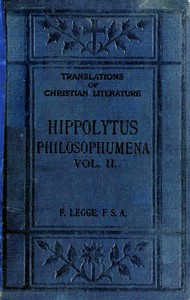
Philosophumena; or, The refutation of all heresies, Volume II by Hippolytus
Let's be clear: this isn't a novel. There's no main character on a journey, at least not in the usual sense. The 'story' here is the story of a fight. Hippolytus, a leading Christian teacher in Rome around 200 AD, believed the church was going off the rails. He saw other teachers and groups promoting ideas he considered dangerous nonsense—from claiming there were two separate gods to saying Jesus wasn't truly human. This book, Philosophumena (which roughly means 'Exposure of Philosophies'), is his counter-attack.
The Story
Hippolytus methodically goes through the beliefs he wants to refute. He starts by linking these Christian 'heresies' back to Greek philosophy, arguing they're just recycled pagan ideas. Then, he digs into the specifics. He describes what groups like the Valentinians, the Sethians, or the followers of Marcion actually taught about God, creation, and salvation. He often quotes their own secret texts and diagrams, which is a goldmine for historians. The plot is the argument itself: Hippolytus lays out a rival's belief, then picks it apart piece by piece using scripture and logic. The drama comes from the sheer intensity of his mission to protect what he sees as the true faith.
Why You Should Read It
You should read it because it shatters the myth of a simple, pure early church. This text shows Christianity as a bubbling cauldron of ideas. Hippolytus is furious, sarcastic, and deeply committed. Reading him, you feel the human stakes. This isn't abstract theology; it's about community, authority, and identity. You get an unfiltered look at beliefs that were ultimately lost because people like Hippolytus argued against them so fiercely. It’s also weirdly fascinating. The descriptions of secret rituals and complex cosmic diagrams are like peeking into an alternate history of Christianity.
Final Verdict
This book is perfect for curious readers who love intellectual detective work and real-world history. It's for anyone interested in religion, the history of ideas, or how movements define themselves against rivals. If you enjoyed Elaine Pagels' work on the Gnostic Gospels, this is a primary source from the other side of that fight. It's not a light read—some parts are dense—but it's incredibly rewarding. You won't find a more passionate, partisan guide to the theological chaos of the ancient world.
This title is part of the public domain archive. Access is open to everyone around the world.
Linda Lopez
1 year agoHaving read this twice, the character development leaves a lasting impact. I couldn't put it down.
Susan Scott
1 year agoHonestly, the clarity of the writing makes this accessible. Absolutely essential reading.
Kimberly Ramirez
1 year agoThis book was worth my time since it provides a comprehensive overview perfect for everyone. Definitely a 5-star read.
Robert Smith
1 year agoI stumbled upon this title and the arguments are well-supported by credible references. Exactly what I needed.







James Gonzalez
9 months agoAs a long-time follower of this subject matter, the visual layout and supporting data make the reading experience very smooth. The price-to-value ratio here is simply unbeatable.