
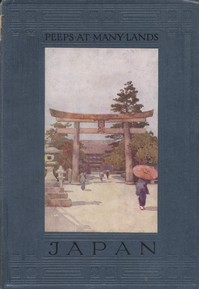
Peeps at Many Lands: Japan by John Finnemore
Published in the early 1900s, John Finnemore's book is part of a series designed to introduce young British readers to life in other countries. Forget dry facts and dates. Finnemore paints a picture with words, creating a vivid tour of Japan as it was over a century ago.
The Story
There isn't a traditional plot here. Instead, Finnemore structures his book like a guided walkthrough. He starts by imagining your arrival by ship, describing the first sights and sounds of a Japanese port. From there, he takes you into the heart of a city, explaining the unique architecture of houses and shops. You'll 'visit' a school, learn about the importance of festivals like the Feast of Dolls, and see how families lived. He covers everything from the solemn tea ceremony to the exciting spectacle of a sumo wrestling match. The journey also goes beyond the cities, offering glimpses of beautiful countryside, majestic Mount Fuji, and the lives of farmers and fishermen. It's a full, sensory tour of a nation from a specific moment in time.
Why You Should Read It
I loved this book for its perspective. Reading it today is a double journey: you're learning about Japan, but you're also seeing how a Westerner interpreted it all in 1907. Finnemore's tone is consistently warm and curious. He's not a critic; he's an enthusiastic visitor trying to understand and explain. His descriptions of children playing, market vendors selling their goods, or the meticulous care of a miniature garden make the past feel alive and relatable. It's a reminder that while technology and fashion change, the core of daily life—family, work, celebration—has a beautiful continuity.
Final Verdict
This book is a perfect, quiet read for anyone with a curiosity about history, travel, or Japan. It's ideal for armchair travelers who enjoy first-hand accounts. If you're planning a trip to Japan, reading this will give you a wonderful sense of historical layers beneath the modern sights. It's also great for parents or teachers looking for an engaging primary source to share with older kids. Just remember, it's a product of its time, so some attitudes will feel dated. Approach it as a friendly postcard from the past, and you'll find a charming and insightful little book.
No rights are reserved for this publication. You do not need permission to reproduce this work.
Matthew Perez
2 months agoUnlike many other resources I've purchased before, the critical analysis of current industry standards is very timely. Top-tier content that deserves more recognition.








Karen Wilson
2 months agoI wanted to compare this perspective with traditional views, the nuanced approach to the central theme was better than I expected. This should be on the reading list of every serious professional.