1

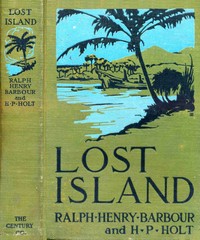
Lost Island — Story, Setting & Ideas
(0 User reviews)
447
Project Gutenberg
2025
Not confirmed
Sea stories; Treasure troves -- Juvenile fiction; Islands of the Pacific -- Juvenile fiction
Readers of public-domain and historical texts
Project Gutenberg digital edition
en
Edition facts
Words
66,955
Reading time
292 min
Text sections
27
Before opening Lost Island — Story, Setting & Ideas, the edition data offers a quick orientation: 66,955 words, 4 hr 52 min estimated reading time, and 27 detected text sections.
The text analysis averages about 16.7 words per sentence, while the detected sections provide another way to judge how the source is divided.
Project Gutenberg metadata also associates the work with “Sea stories,” connecting these edition facts with the source record’s subject description.
Source:
Project Gutenberg record #76451
In Ralph Henry Barbour's 1917 adventure, sixteen-year-old Dave Hallard, inspired by an old sailor's tales, joins a voyage to the South Seas. The excerpts show a focus on maritime lore, castaway survival, and the tension of drawing lots to determine who stays marooned on a Pacific island.
Editorial Edition Score
4.9/5
★★★★★
★★★★★
Calculated from edition completeness, EPUB availability, text structure and catalogue metadata. Not a user rating.
How this score is calculated
- Description quality20 pts
- Title & short description10 pts
- Source metadata20 pts
- Text length15 pts
- Chapters / structure15 pts
- EPUB file integrity20 pts
Total of 100 points, scaled to a 2.5-5.0 range. Editions with an empty description or a missing EPUB file are not scored.
Edition quality
Public-domain source text
Read the source text
The source text is kept in the dedicated reader, separate from this catalogue record and its commentary.
The novel opens not with a shipwreck but with a conversation on a wharf: an old sailor slapping paint on a ship's side while sixteen-year-old Dave Hallard, legs dangling above oily water, listens to tales of the South Seas. The sailor's voice—full of rope's-end discipline and grudging affection for a hard life—sets the tone for a story that treats the sea as both lure and trial. The catalog subjects promise treasure troves and Pacific islands, but the excerpts reveal a more deliberate interest in the logistics of survival: how a crew decides who stays behind on an uninhabited island, how a spring provides fresh water, and how wild hogs become a puzzle of Pacific mysteries.
The Call of the Sea and Its Cost
The first chapter establishes a familiar adventure premise—a boy yearning for the sea—but Barbour grounds it in specific, unsentimental detail. The old sailor does not romanticize his life: he recalls the rope's-end punishments and admits there were times he would have given a month's pay for solid land. Dave's own physique—broad shoulders, firm mouth, steady grey eyes—is described as the product of outdoor sports, not innate heroism. The dialogue avoids grand pronouncements; the sailor's phrase "It gets a hold over you" is as close to a philosophy as the book offers. The excerpts suggest that the novel's appeal lies less in exotic locations than in the credible, workmanlike portrayal of maritime experience.
Castaways and the Logic of Survival
When the crew of the Manihiki is stranded on an unnamed island, the narrative shifts from adventure to practical problem-solving. The island is surveyed methodically: a mile long, half a mile wide, with a clear spring and no snakes. The only animals are small wild hogs, whose origin the characters debate without reaching a conclusion. The decision to attempt a voyage to Suva in the long-boat is presented as a rational choice, not a desperate gamble. The casting of lots to determine who stays behind is handled with quiet tension: each man picks a slip of paper, some with a jest, others eagerly. The carpenter, drawing a blank, forces a smile. The scene avoids melodrama, focusing instead on the crew's matter-of-fact acceptance of risk.
Voice and Structure: A Story Told in Episodes
The chapter titles—such as "In which Dave Hallard Hears the Call of the Sea" and "In which Tempest Stays Behind"—signal a episodic structure reminiscent of serialized adventure fiction. The narrative voice is direct and unadorned, favoring action over introspection. Dialogue carries much of the characterization: Captain Peters speaks in measured, authoritative sentences; the old sailor uses nautical dialect ("Aye, there's queer sights in them latitudes"); and Tempest's dry humor appears in lines like "We're all fond of roast pork whether we know its history or not." The illustrations listed—including a frontispiece of Dave shouting "The camel, Tempest! The camel!"—suggest that visual spectacle and physical comedy play a role, though the excerpts emphasize the crew's collective decision-making over individual heroics.
Treasure and Its Absence
Despite the catalog subject "Treasure troves -- Juvenile fiction," the excerpts contain no mention of buried gold or pirate loot. The treasure, if it exists, remains offstage. What the text does show is a different kind of prize: the survival of a small group on a remote island, the successful launch of a boat, and the navigation of uncertain waters. The novel's title, Lost Island, refers to the island itself, not to a hidden cache. Readers expecting a conventional treasure hunt may find instead a story about the value of resourcefulness and the cost of adventure. The absence of treasure in the available passages is worth noting, as it suggests the catalog subject may be more generic than the book's actual focus.
The Role of the Illustrations
The list of illustrations provides a visual roadmap to key scenes: Dave and Tempest watching a boat glide away, three forms emerging toward the Nautilus, and Tempest laughing at a Kanaka's expression of disappointment. These images hint at a diverse cast—including a Kanaka character—and at moments of tension and comedy. The frontispiece, showing Dave shouting about a camel, suggests an episode of mistaken identity or absurdity that is not evident in the prose excerpts. The illustrations, by C. M. Relyea, were likely a significant part of the original 1917 edition, and their inclusion in the digital text preserves a visual dimension that complements the episodic narrative.
Lost Island rewards readers who attend to its practical details: the way a spring is discovered, the weight of a long-boat, the taste of roast pork from a mysterious hog. The catalog subjects point toward treasure and sea stories, but the excerpts suggest a quieter interest in how people behave when stranded. Approach the novel as a survival narrative with episodic structure and a cast of characters who speak in distinct, unpretentious voices. The treasure may be the island itself—or the knowledge of how to leave it.
That rainy afternoon, Lost Island kept me company, the creaking ship and salt air filling my quiet room. After Dave drew his lot, I found myself unsettled, pondering fate’s small hinges. I reached for something else, an old anthology of fragments, and there it was: a line about chance and choice, echoing Barbour’s tale across the years. Reading Gleanings from the Harvest-Fields of Literature: A Melange of Excerpta — Reading Companion felt like finding a forgotten note tucked between pages, a quiet answer to a question I hadn’t fully asked.
There are no reviews for this eBook.
There are no comments for this eBook.
Reader reflection
Record your reading impressions
A brief reflection can help important ideas stay with you longer.
Your progress
0
/
10
2
How did the book work for you overall?
3
Would you pass this book on to a friend?
4
Did the language feel accessible?
5
Did it raise ideas you would like to talk about?
6
Which part made the strongest impression?
7
Did any part of the book stay with you emotionally?
8
What did you think about the pace?
9
What changed or sharpened your thinking?
10