1

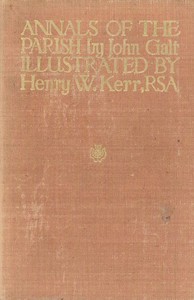
The Annals of the Parish Or, the Chronicle of Dalmailing During the Ministry of the Rev. Micah Balwhidder — Themes and Context
(0 User reviews)
430
Project Gutenberg
1998
Not confirmed
Clergy -- Fiction; Scotland -- Fiction
Readers of public-domain and historical texts
Project Gutenberg digital edition
en
Edition facts
Words
69,405
Reading time
302 min
Text sections
6
The Annals of the Parish Or, the Chronicle of Dalmailing During the Ministry of the Rev. Micah Balwhidder — Themes and Context can be approached with a clearer sense of reading commitment from its source measurements: 69,405 words, 5 hr 2 min estimated reading time, and 6 detected text sections.
The text analysis averages about 37.4 words per sentence, while the detected sections provide another way to judge how the source is divided.
Project Gutenberg metadata also associates the work with “Clergy -- Fiction,” connecting these edition facts with the source record’s subject description.
Source:
Project Gutenberg record #1310
John Galt's 1821 novel presents the memoirs of Rev. Micah Balwhidder, chronicling 50 years in a Scottish parish through a distinctive, gently ironic narrative voice that blends clerical piety with earthy observation.
Editorial Edition Score
4.7/5
★★★★★
★★★★★
Calculated from edition completeness, EPUB availability, text structure and catalogue metadata. Not a user rating.
How this score is calculated
- Description quality20 pts
- Title & short description10 pts
- Source metadata20 pts
- Text length15 pts
- Chapters / structure15 pts
- EPUB file integrity20 pts
Total of 100 points, scaled to a 2.5-5.0 range. Editions with an empty description or a missing EPUB file are not scored.
Edition quality
Public-domain source text
Read the source text
The source text is kept in the dedicated reader, separate from this catalogue record and its commentary.
The opening sentence of The Annals of the Parish immediately establishes a dual chronology: the narrator, Rev. Micah Balwhidder, is placed as minister of Dalmailing on the same day King George III came to the throne. This parallel between personal and national history sets the tone for a work that intertwines local events with broader historical currents, always filtered through Balwhidder's distinctive voice—a blend of scriptural cadence, Scots idiom, and wry understatement. The narrative proceeds year by year, but the pace is far from uniform: some years pass with a single anecdote, while others unfold in leisurely detail. Galt's control of tempo is evident in the way he lingers over a scandal or a death, then skims over quieter seasons, creating a rhythm that mimics the uneven texture of memory itself.
A Voice Between Pulpit and Parish
Balwhidder's narrative voice is the book's central achievement. He writes as a minister, yet his language is not uniformly elevated. He can shift from a biblical reference to a homely Scots phrase within a single sentence, as when he describes a parishioner as having 'gleg een' (sharp eyes) or notes that 'there never was a silly Jock, but there was as silly a Jenny.' This mixture of registers gives the impression of a man who is both a spiritual guide and a shrewd observer of human folly. Galt never lets the voice become monotonous: Balwhidder's piety is genuine but not priggish, and his judgments are tempered by a forgiving humor. The reader is always aware of the gap between what Balwhidder says and what he might be thinking, a subtle irony that enriches every page.
The Rhythm of Calamity and Routine
Galt varies the pace of the narrative by juxtaposing sudden, violent events with long stretches of ordinary life. The shooting of Lord Eaglesham by the exciseman Mungo Argyle is described with a swift, almost breathless accumulation of detail: 'Never shall I forget that day; such riding, such running, the whole country side afoot.' The following paragraph, however, returns to the slower tempo of domestic incident—a stroke suffered by Lady Macadam during a dinner. This alternation between crisis and calm is a structural principle of the Annals. Balwhidder often marks time by the seasons or by the church calendar, but he also punctuates his chronicle with deaths, births, and scandals that disrupt the expected flow. The result is a narrative that feels both cyclical and unpredictable, much like life in a small community.
The Texture of Local Speech
Galt's use of Scots vocabulary and syntax is not merely decorative; it shapes the reader's experience of the parish. Words like 'weans' (children), 'kirk' (church), and 'dree' (endure) are woven into Balwhidder's prose without explanation, creating a sense of immersion in a specific linguistic community. The dialogue, too, is carefully rendered: when Lord Eaglesham says 'I fear I dare not ask you to come to the castle,' the polite evasion is instantly recognizable. Galt does not exaggerate dialect for comic effect; instead, he uses it to convey character and social relations. The narrator's own language is a mix of formal English and Scots, reflecting his education and his roots. This linguistic texture gives the Annals a density that rewards slow reading, as each phrase carries the weight of a particular time and place.
Readers approaching The Annals of the Parish should attend to the gaps as much as the events. Balwhidder's omissions—what he chooses not to dwell on—are as revealing as his anecdotes. The book rewards those who read between the lines, noticing the quiet irony in his praise of a parishioner or the slight awkwardness in his account of a nobleman's misdeeds. It is a novel that demands patience but offers, in return, a remarkably vivid portrait of a community seen through one man's eyes.
There’s a particular ache in Micah Balwhidder’s chronicle—the way fifty years of quiet Sundays pile up like stones in a field. I found myself thinking of it again while revisiting The Way of an Eagle — Background and Themes, where that same sense of time passing leaves its own strange, reluctant grace. Some books simply remember you back.
There are no reviews for this eBook.
There are no comments for this eBook.
Reader reflection
How did this book work for you?
Your answers remain private and are stored only in this browser.
Your progress
0
/
10
2
Did this book hold your interest?
3
How likely are you to recommend this book?
4
How demanding did the text feel?
5
How clear did the writing feel?
6
How distinctive were its ideas or approach?
7
How would you describe its reading pace?
8
Would this book work well in a reading group?
9
What is the main idea you are taking away?
10