
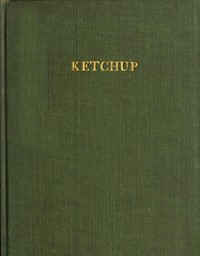
Ketchup: Methods of Manufacture; Microscopic Examination by Bitting and Bitting
Let's clear something up right away: this is not a cookbook. Ketchup: Methods of Manufacture; Microscopic Examination is a scientific report, a public health manifesto, and a historical snapshot all poured into one surprisingly compelling book.
The Story
The 'plot' is the battle for safe food. In the era before strict regulations, ketchup was a lawless frontier. Unscrupulous manufacturers filled bottles with pulped pumpkin, apple scraps, and starch, using harmful preservatives like salicylic acid and coal-tar dyes to mimic the color and shelf-life of real tomato ketchup. People were getting sick from their condiments. Katherine Bitting, armed with her chemistry knowledge and a microscope, made it her mission to expose this fraud. The book is her evidence file. She first documents all the shady, dangerous methods used to make fake ketchup. Then, she presents the clear, hygienic standards for producing genuine, preservative-free tomato ketchup. The entire narrative builds toward a simple, powerful conclusion: here is what's wrong, and here is how to make it right.
Why You Should Read It
You should read it because it makes the invisible, visible. Bitting writes with the calm, precise authority of someone who has seen the enemy under her lens and isn't afraid to name it. There's a quiet drama in her lists of adulterants and her detailed photos of microbial contaminants. You feel her frustration with an industry cutting corners and her determination to protect consumers. More than that, it's a brilliant portrait of a forgotten pioneer. In 1910, Katherine Bitting was a woman leading a major scientific charge in a field dominated by men. Her work directly paved the way for the pure food laws we take for granted today. Reading her book is like getting a backstage pass to the moment when science started to win the war for our dinner tables.
Final Verdict
This book is perfect for history buffs who love deep dives into everyday life, for foodies curious about the gritty origins of their pantry staples, and for anyone who enjoys a real-life story of integrity versus corruption. It's not a breezy read—it's a technical document—but if you have any interest in how our food system became (mostly) safe, it's a fascinating and important piece of the puzzle. You'll never look at a squeeze bottle the same way again.
This masterpiece is free from copyright limitations. It is now common property for all to enjoy.
Kimberly Smith
11 months agoHaving followed this topic for years, I can say that the historical context mentioned in the early chapters is quite enlightening. I'm glad I chose this over the other alternatives.
Paul Thomas
2 years agoMy first impression was quite positive because the argument presented in the middle section is particularly compelling. Definitely a five-star contribution to the field.
Matthew Martin
10 months agoI started reading this with a critical mind, the logic behind each conclusion is easy to follow and verify. Thanks for making such a high-quality version available.




Margaret Anderson
5 months agoI appreciate the objective tone and the evidence-based approach.