
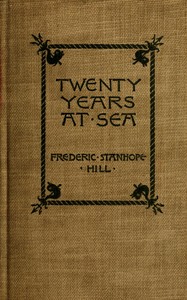
Twenty years at sea: Leaves from my old log-books by Frederic Stanhope Hill
Frederic Stanhope Hill's Twenty Years at Sea is exactly what the title promises: a collection of stories and observations pulled directly from the logbooks he kept during his career from the 1840s to the 1860s. He starts as a green young man on a merchant vessel, learning the ropes (literally) through hard experience. The book follows his journey up the ranks to become a ship's captain, navigating not just the Atlantic and Pacific but also a world undergoing massive change.
The Story
There's no single, linear plot. Instead, think of it as a series of vivid episodes. One chapter might detail a desperate race against a hurricane in the Atlantic. The next could describe the strange customs and tricky politics of trading in a South American port. Hill encounters pirates (or rumors of them), deals with stubborn and sometimes mutinous crews, and faces the heartbreaking task of burying men at sea. Woven throughout is the quiet background hum of history: the California Gold Rush, the shift from sail to steam power, and the fading of an era where a ship's captain was a solitary king of his floating world.
Why You Should Read It
I love this book for its utter lack of pretense. Hill isn't trying to be a literary hero. He's a practical, observant man telling you what happened. That voice is its greatest strength. You get the facts—the wind direction, the cargo, the longitude—but you also get his dry wit and his deep respect for the sea's power. He doesn't romanticize the life; he shows the boredom, the bad food, the fear, and the incredible skill it took to survive. Reading it feels less like reading a book and more like sitting across from an old sailor in a dockside tavern, listening to him spin tales from his youth.
Final Verdict
This is a perfect read for anyone with a curiosity about real maritime history, not the swashbuckling fiction. If you enjoy first-person accounts, primary sources, or simply solid adventure stories told without flashy effects, you'll be hooked. It's also great for people who love details about how things worked in the past—how you navigate without GPS, how you manage a crew of 50 in close quarters, how you repair a mast in a storm. It's a slow, steady, and completely absorbing journey into the past. Just be prepared—you might start looking at the ocean a little differently.
The copyright for this book has expired, making it public property. Preserving history for future generations.
Jessica Scott
4 months agoI stumbled upon this title and the narrative structure is incredibly compelling. Truly inspiring.
Linda Davis
1 year agoFinally a version with clear text and no errors.







Susan Jackson
4 months agoBefore I started my latest project, I read this and the transition between theoretical knowledge and practical application is seamless. If you want to master this topic, start right here.