1

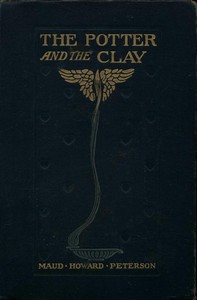
The Potter and the Clay: A Romance of Today — Inside the Classic
(0 User reviews)
2638
Project Gutenberg
2014
Not confirmed
Great Britain -- Social life and customs -- 19th century -- Fiction; Triangles (Interpersonal relations) -- Fiction; Soldiers -- Fiction; India -- History -- British occupation, 1765-1947 -- Fiction; British -- India -- Fiction; Cowardice -- Fiction; Cholera -- Fiction; Love -- Fiction
Readers of public-domain and historical texts
Project Gutenberg digital edition
en
Edition facts
Words
61,594
Reading time
268 min
Text sections
10
The source record for The Potter and the Clay: A Romance of Today — Inside the Classic measures this digital text at 61,594 words, 4 hr 28 min estimated reading time, and 10 detected text sections.
The text analysis averages about 15.2 words per sentence, while the detected sections provide another way to judge how the source is divided.
Project Gutenberg metadata also associates the work with “Great Britain -- Social life and customs -- 19th century -- Fiction,” connecting these edition facts with the source record’s subject description.
Source:
Project Gutenberg record #47272
An editorial note on Maud Howard Peterson's 1901 novel, focusing on its structure, recurring images of clay and pottery, and movement between English drawing rooms and Indian battlefields.
Editorial Edition Score
4.8/5
★★★★★
★★★★★
Calculated from edition completeness, EPUB availability, text structure and catalogue metadata. Not a user rating.
How this score is calculated
- Description quality20 pts
- Title & short description10 pts
- Source metadata20 pts
- Text length15 pts
- Chapters / structure15 pts
- EPUB file integrity20 pts
Total of 100 points, scaled to a 2.5-5.0 range. Editions with an empty description or a missing EPUB file are not scored.
Edition quality
Public-domain source text
Read the source text
The source text is kept in the dedicated reader, separate from this catalogue record and its commentary.
The novel opens with a prologue set in India, where a lieutenant's daughter is introduced, but the narrative quickly shifts to London. This geographic and emotional oscillation between England and India structures the entire work, mirroring the characters' internal conflicts. The title's metaphor of potter and clay, drawn from the Rubáiyát and a Browning poem, recurs not only in dialogue but in the very fabric of the story's movement: characters are shaped, broken, and reshaped by circumstances.
The Potter's Wheel as Structural Principle
The epigraphs from Omar Khayyám and Robert Browning establish the potter's wheel as a central metaphor. The novel's three books—"The clay takes shape," "The break in the clay," and "The Potter's touch"—directly map onto this image. Each section corresponds to a phase in the protagonist's life: formation, crisis, and potential redemption. The excerpts show how the metaphor is woven into scenes: flowers are arranged, wounds heal or reopen, and characters are "pulled through" by sheer will. The wheel's turning is not just thematic but structural, as the narrative repeatedly cycles between calm and catastrophe.
Recurring Images: Flowers, Wounds, and Shadows
Flowers appear as precise emotional markers. Violets, lilies, and roses are not mere decoration: they signal loyalty, memory, and social obligation. In one excerpt, violets from Cary trigger a confession of love, while their scent later becomes "exquisite torture" for Trevelyan. Wounds—both physical and psychological—are described with clinical specificity: a "half healed wound reopened," a "sinking spell." The "Shadowy Presence" of death is personified as an adversary that Trevelyan "beat[s] back." These recurring images create a sensory texture that reinforces the novel's preoccupation with fragility and endurance.
Movement Between Intimate and Public Spaces
The story shuttles between the hushed sickroom on Grosvenor Square and the open, perilous landscapes of India. The sickroom is a space of controlled intimacy: muffled bells, drawn curtains, and the careful placement of flowers. In contrast, India is evoked as a site of action and memory, where the "perilous ride" and the government hospital form the backdrop of past trauma. This movement is not merely geographical; it reflects a psychological oscillation between vulnerability and duty. The novel's tension derives from how these spaces collide—memories of India invade the London house, and the domestic sphere becomes a battlefield of its own.
The Role of the Observer: Trevelyan's Silent Vigil
Trevelyan emerges as a figure of intense, almost silent observation. In the sickroom, he sits "for hours at a time, his finger on Stewart's pulse," rarely sleeping. His actions are described with minimal dialogue; his presence is felt through physical detail. The narrative withholds his interiority, focusing instead on his effect on others: his aunt stops short at his face, and he never reveals the torture the violets cause him. This restraint creates a character defined by what he does not say, making him a compelling counterpoint to more vocal characters. His role as witness and protector underscores the novel's interest in unspoken sacrifice.
Readers attentive to the novel's structure will notice how each book's title foreshadows the action, and how the potter's wheel metaphor governs not just the plot but the pacing. The movement between England and India is not arbitrary; it mirrors the characters' internal fractures. Pay attention to the placement of flowers and the moments of silence—they often carry more weight than dialogue.
I keep thinking about that clay imagery—how Peterson’s characters are shaped by forces they can’t see, the way a potter’s thumb leaves its print. It reminded me of reading The Grain of Dust one gray afternoon, feeling that same quiet pressure of circumstance on a life. Some novels just hold that weight, like a damp hand on a shoulder.The Grain of Dust: A Novel — Themes and Context
There are no reviews for this eBook.
There are no comments for this eBook.
Reader reflection
What was your reading experience?
Capture what you thought, learned, and would like to remember.
Your progress
0
/
10
2
How did the book work for you overall?
3
How likely are you to recommend this book?
4
What was the reading difficulty like?
5
How clearly were the main ideas presented?
6
What did you appreciate most?
7
Did the book give you something worth debating?
8
Did the book offer a fresh perspective?
9
What did this book teach you most?
10