1

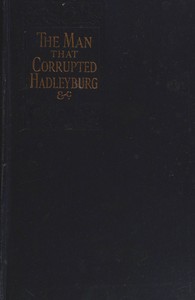
The Man That Corrupted Hadleyburg — A Reader’s Guide
(0 User reviews)
62
Project Gutenberg
1998
Not confirmed
Humorous stories, American; United States -- Social life and customs -- 19th century -- Fiction
Readers of public-domain and historical texts
Project Gutenberg digital edition
en
Edition facts
Words
21,507
Reading time
94 min
Text sections
2
This digital edition of The Man That Corrupted Hadleyburg — A Reader’s Guide is described by source-level measurements including 21,507 words, 1 hr 34 min estimated reading time, and 2 detected text sections.
The text analysis averages about 17.9 words per sentence, while the detected sections provide another way to judge how the source is divided.
Project Gutenberg metadata also associates the work with “Humorous stories, American,” connecting these edition facts with the source record’s subject description.
Source:
Project Gutenberg record #1213
Mark Twain's satire of a town's self-righteous honesty, where a stranger's revenge plot exposes hypocrisy through a carefully worded test. The narrative shifts from measured exposition to farcical public humiliation, with Twain's precise control of pacing and dialogue.
Editorial Edition Score
4.5/5
★★★★★
★★★★★
Calculated from edition completeness, EPUB availability, text structure and catalogue metadata. Not a user rating.
How this score is calculated
- Description quality20 pts
- Title & short description10 pts
- Source metadata20 pts
- Text length15 pts
- Chapters / structure15 pts
- EPUB file integrity20 pts
Total of 100 points, scaled to a 2.5-5.0 range. Editions with an empty description or a missing EPUB file are not scored.
Edition quality
Public-domain source text
Read the source text
The source text is kept in the dedicated reader, separate from this catalogue record and its commentary.
Twain opens with a deceptively straightforward account of Hadleyburg's reputation for honesty, a reputation so carefully cultivated that it becomes the town's defining trait. The narrator's tone is measured, almost clinical, as he describes how the town teaches honesty "to its babies in the cradle" and keeps temptations away from the young. Yet within this calm exposition, Twain plants the seeds of satire: the town's pride is so excessive that it invites its own undoing. The stranger's revenge plot is introduced with a sudden shift in mood—his "evil joy" and the plan to "corrupt the town" inject a note of dark comedy. This opening establishes a narrative voice that oscillates between dry observation and sly humor, a pattern that will intensify as the story progresses.
The Stranger's Calculated Revenge
The stranger's plan is not merely malicious; it is meticulously engineered to exploit the town's vanity. Twain describes how the stranger spends a year nursing his injury and devising a scheme that would "comprehend the entire town." The language here is precise: the stranger wants a plan that would "not let so much as one person escape unhurt." This phrasing underscores the methodical, almost bureaucratic nature of his revenge. The sack of lead coins, the sealed note, and the conditional reward are all tools of a psychological experiment. Twain's narrative voice remains coolly detached, allowing the absurdity of the situation to emerge through the stranger's own words: "That is the thing to do—I will corrupt the town." The pacing is deliberate, building anticipation for the town's inevitable fall.
The Public Unraveling
The town meeting scene is a masterclass in pacing and tonal shift. Twain begins with the solemn reading of the test remarks, but the tension quickly dissolves into farce. The crowd's reaction to the phrase "go to hell or Hadleyburg" is a cascade of suppressed laughter that finally erupts when Jack Halliday shouts, "That's got the hall-mark on it!" The narrator's description of the audience's struggle to maintain composure—"bent their heads down and shielded their faces with their hands"—is both precise and comic. The Chair's attempts to restore order are repeatedly undermined, and the laughter becomes "tempestuously wholehearted." Twain controls the rhythm of the scene with short, punchy sentences and sudden interruptions, mimicking the chaos of a public spectacle. The dialogue is sharp, with characters like Wilson and Billson revealing their desperation through stilted, legalistic speech.
The Weight of a Single Word
Twain's attention to language is most evident in the test remarks themselves. The difference between Wilson's and Billson's versions hinges on a single word—or, more precisely, the omission of fifteen crucial words. The Chair's dramatic pause and the murmur that "sifted through the house" highlight the town's obsession with exact wording. Twain uses this moment to expose the fragility of reputation: a mere verbal slip can unravel a lifetime of perceived honesty. The narrator's commentary is spare, letting the characters' reactions speak for themselves. Billson sits in "helpless collapse," while Wilson, a lawyer, struggles to his feet with a pale, worried demeanor. The scene underscores how language, in Twain's hands, becomes both a weapon and a trap. The pacing slows to a crawl as the Chair allows "the pervading stillness to gather and deepen its impressive effects," a technique that amplifies the tension before the final revelation.
Twain's narrative voice in The Man That Corrupted Hadleyburg is a study in controlled irony. He moves from leisurely exposition to rapid-fire dialogue, from solemn pronouncements to riotous laughter, all while maintaining a tone of detached amusement. Readers should pay attention to how Twain uses repetition—of phrases like "hall-mark" and "incorruptible"—to underscore the town's self-deception. The story's structure, with its careful setup and explosive climax, rewards attention to the details of the stranger's scheme and the townspeople's reactions.
That rainy afternoon, I kept returning to the moment Hadleyburg’s smug facade cracked, not from a grand lie, but from a whisper of self-doubt. The book’s quiet cruelty stayed with me. Later, sifting through a box of old paperbacks, I found something gentler about rural stubbornness, and it felt like a balm. I paused over On Our Selection — Themes and Context, remembering how pride looks different when it's tied to the land itself.
There are no reviews for this eBook.
There are no comments for this eBook.
Reader reflection
How will you remember this book?
Save your reaction, strongest insight, and memorable passage.
Your progress
0
/
10
2
Did this book hold your interest?
3
Would you encourage someone else to read it?
4
Did the language feel accessible?
5
How did the pace of the book feel?
6
How did the reading compare with what you expected?
7
How strong was your personal connection to the text?
8
How would you rate its originality?
9
What did this book teach you most?
10