1

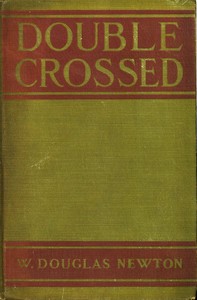
Double Crossed — Inside the Classic
(0 User reviews)
504
Project Gutenberg
2022
Not confirmed
Love stories; Canada -- Fiction; Young men -- Fiction; Conspiracies -- Fiction; Adventure stories; Heiresses -- Fiction; Ocean liners -- Fiction
Readers of public-domain and historical texts
Project Gutenberg digital edition
en
Edition facts
Words
71,050
Reading time
309 min
Text sections
7
Before opening Double Crossed — Inside the Classic, the edition data offers a quick orientation: 71,050 words, 5 hr 9 min estimated reading time, and 7 detected text sections.
The text analysis averages about 12.2 words per sentence, while the detected sections provide another way to judge how the source is divided.
Project Gutenberg metadata also associates the work with “Love stories,” connecting these edition facts with the source record’s subject description.
Source:
Project Gutenberg record #67529
W. Douglas Newton's 1922 adventure-romance uses clipped, rapid dialogue and a knuckly, bounding little man to launch a conspiracy aboard an ocean liner. The prose favors physical verbs and telegraphic exchanges, with a hero who unpacks dress-shirts while being recruited to protect an heiress.
Editorial Edition Score
4.7/5
★★★★★
★★★★★
Calculated from edition completeness, EPUB availability, text structure and catalogue metadata. Not a user rating.
How this score is calculated
- Description quality20 pts
- Title & short description10 pts
- Source metadata20 pts
- Text length15 pts
- Chapters / structure15 pts
- EPUB file integrity20 pts
Total of 100 points, scaled to a 2.5-5.0 range. Editions with an empty description or a missing EPUB file are not scored.
Edition quality
Public-domain source text
Read the source text
The source text is kept in the dedicated reader, separate from this catalogue record and its commentary.
The first chapter of Double Crossed introduces Clement Seadon unpacking dress-shirts in his cabin when a “little, knuckly man” bounds in with “india-rubber violence.” The dialogue is clipped, repetitive, and almost vaudevillian: the stranger insists Seadon knows Heloise Reys; Seadon parries with deliberate casualness. Newton builds tension through physical verbs—the man “danced about,” “snapped the door closed”—and through Seadon’s guarded amusement, which contrasts with the stranger’s breathless urgency. The scene establishes a pattern of withheld information and rapid-fire exchange that persists throughout the excerpts.
Diction of Urgency and Evasion
Newton’s characters rarely speak in complete, measured sentences. The little lawyer Hartley Hard fires off commands: “Don’t talk. I haven’t much time.” Clement replies with “exasperating (and, one is afraid, deliberate) casualness.” The dialogue is built from short bursts—“You’re Clement Seadon,” “I’m Hartley Hard,” “Not at all”—that create a staccato rhythm. Adverbs like “breathlessly,” “genially,” and “dryly” tag nearly every line, telling the reader how to hear the words. This technique keeps the pace relentless and mirrors the conspiratorial plot: everyone is either pressing for information or withholding it.
Physical Description as Characterization
Newton describes people through abrupt, kinetic images. Hartley Hard is “a little, knuckly man” with “india-rubber violence.” The Chief smiles “with his lips, but his eyes keen.” Heavy speaks with “a seaman’s bluntness.” These thumbnail sketches are economical: they fix a character’s manner in a single phrase. Objects also carry weight—the umbrella, the dress-shirts, the key to a trap. The prose favors concrete nouns and active verbs over introspection. When Clement thinks of Canada’s “vastness,” the thought is immediately undercut by The Chief’s genial confidence in “our system.” The physical world drives the narrative.
Structure of Delayed Revelation
The excerpts show a pattern of information parceled out in fragments. In the opening, Hard reveals Heloise’s identity piece by piece: she is good-looking, charming, rich, orphaned. Clement’s responses—“Not really,” “Probably”—force the disclosure. Later, The Chief’s investigation unfolds in stages: confirming the porter’s report, checking reservations, telephoning Montreal. Newton withholds the full conspiracy until the final excerpt, where Clement promises “a strange, unbelievable crime and mystery story.” The narrative moves by a series of small reveals, each one prompting the next action. This structure keeps the reader in a state of partial knowledge, mirroring the hero’s own uncertainty.
Recurring Motifs of Traps and Escape
Clement twice mentions escaping a trap: “the one on the Empress—the diamond tiara trap.” The word “trap” recurs alongside images of confinement—the cabin, the handcuffs, the locked room. Heavy observes that Clement “seems to have been trying to do Houdini stunts.” The motif extends to the plot’s central conspiracy: Heloise is being maneuvered into a marriage or abduction. Newton uses physical traps (handcuffs, locked doors) as metaphors for the larger scheme. The Chief’s calm efficiency offers a counterweight, suggesting that systems of order can counteract the traps laid by criminals. The tension between entrapment and escape drives the action.
Readers should attend to Newton’s use of dialogue as a tool for pacing and characterization. The rapid, incomplete exchanges are not merely stylistic—they encode the power dynamics and secrets that propel the plot. The excerpts offer only the opening and a later scene; the full novel likely extends the pattern of delayed revelation and physical action. Pay attention to how Newton balances the hero’s geniality with the menace of the conspiracy, and how the setting—an ocean liner, a hotel, a train—becomes a series of confined spaces that heighten the sense of pursuit.
That clipping dialogue in Double Crossed took me back to evenings on my grandfather’s porch, his voice snapping through old adventure yarns. Something about the knuckly little man’s urgency felt familiar, like the quiet ache in Tales and Fantasies — Context and Discussion, where even the gentlest stories carry a current of loneliness beneath their motion.
There are no reviews for this eBook.
There are no comments for this eBook.
Reader reflection
Record your reading impressions
A brief reflection can help important ideas stay with you longer.
Your progress
0
/
10
2
Did this book hold your interest?
3
Would you pass this book on to a friend?
4
How much effort did this book require?
5
Did this book create an emotional response?
6
How closely did the book connect with your experience?
7
Would you read this book again?
8
Could you apply anything you learned?
9
What is the main idea you are taking away?
10