
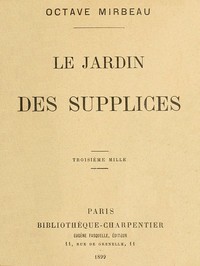
Le jardin des supplices by Octave Mirbeau
Let's get into the weeds of this strange and unsettling story. 'The Torture Garden' is split into two main parts that feel like different books slammed together, which is kind of the point.
The Story
The first half is a sharp, cynical satire. We meet our unnamed narrator in France. He's a politically connected guy who's deeply involved in all the corruption and backroom deals of his time. He's bored, jaded, and completely amoral. After a scandal, he flees Europe on a ship, where he meets Clara, a fascinating and wealthy Englishwoman. She's obsessed with death and extreme sensation.
The second half is where the title comes in. Clara brings the narrator to her private garden in China. This isn't a place for roses and tea. It's attached to a state prison, and it's where executions are turned into a bizarre public spectacle. The garden itself is stunningly beautiful, filled with exquisite flowers, but they are fertilized by blood and decay. The narrator becomes a horrified yet captivated spectator, watching elaborate tortures unfold amidst the blossoms. The story forces him—and us—to watch.
Why You Should Read It
This book isn't about plot twists; it's about the brutal collision of ideas. Mirbeau uses the narrator's moral emptiness in the first part to set up the visceral shock of the second. The garden isn't just a place of pain; it's a mirror. It reflects the hidden cruelty and hypocrisy the narrator left behind in 'civilized' Europe. The real horror might not be the graphic scenes (which are intense), but the realization that the narrator, and maybe the reader, can find a twisted beauty in them. It's a book about complicity. It makes you ask: when we look at suffering, even when we condemn it, are we also getting a dark thrill from the view?
Final Verdict
This is not a book for everyone. If you need likeable characters or a comforting ending, look elsewhere. But if you're up for a challenging, philosophical horror story that reads like a bad dream you can't wake up from, give it a shot. It's perfect for readers who loved the social critique of Brave New World or the psychological unease of Heart of Darkness, but want something even more raw and unflinching. Be prepared—it's a lot. But over a century later, its questions about violence, art, and our own dark curiosities still hit hard.
This text is dedicated to the public domain. Use this text in your own projects freely.
Carol Clark
1 year agoFast paced, good book.
Kevin Torres
1 year agoI was skeptical at first, but the narrative structure is incredibly compelling. Absolutely essential reading.
Matthew Anderson
3 months agoClear and concise.
Linda Moore
8 months agoBased on the summary, I decided to read it and the plot twists are genuinely surprising. Exactly what I needed.
Joshua Flores
2 years agoHelped me clear up some confusion on the topic.