
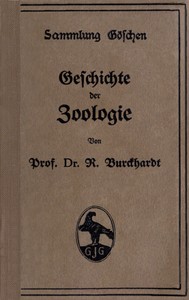
Geschichte der Zoologie by Rudolf Burckhardt
Let's be clear: this isn't a storybook with a plot about a hero. Instead, Geschichte der Zoologie tells the story of an idea—how humans figured out the science of animals. Rudolf Burckhardt, writing over a century ago, acts as our guide through centuries of confusion, brilliance, and occasional silliness.
The Story
Burckhardt starts in the ancient world, where knowledge was a mix of careful observation and pure myth. He shows us Aristotle sorting animals by how they lived, and then takes us through the long period where much of that careful work was forgotten or distorted. We see medieval bestiaries filled with creatures that never existed. The real turning point comes with the Renaissance, when people like Leonardo da Vinci started dissecting bodies to see how they actually worked, not just how ancient books said they did. The book follows this thread through the invention of the microscope, the epic battles over classification systems, and right up to the evolutionary ideas that were shaking the world when Burckhardt was writing. The 'conflict' is the centuries-long struggle between seeing what we expect to see and learning to see what's actually there.
Why You Should Read It
What I loved most was how human it all feels. This isn't a dry march of progress. It's full of dead ends, fierce arguments, and personalities. You get a real sense of the excitement when someone first saw cells under a lens, or the frustration when old, wrong ideas just wouldn't die. Burckhardt has a sharp eye for these moments. He doesn't just tell you what happened; he makes you feel the weight of changing a whole worldview. It made me look at my own goldfish in a new light—realizing how many smart, curious people it took over 2,000 years for us to even begin to understand it properly.
Final Verdict
This is a perfect read for anyone who enjoys history or science, but finds most books on the topic a bit stiff. It's for the curious person who likes to know the 'how' and 'why' behind the facts they learned in school. Because it was written in 1908, the language has a classic, thoughtful pace—it's not a quick skim. But if you're willing to settle in with it, you'll be rewarded with a captivating look at one of humanity's greatest collective projects: understanding the living world around us.
This book is widely considered to be in the public domain. It is available for public use and education.
Jackson White
6 months agoI started reading out of curiosity and the author's voice is distinct and makes complex topics easy to digest. I learned so much from this.
Noah Thompson
1 year agoAfter hearing about this author multiple times, the content flows smoothly from one chapter to the next. Exactly what I needed.
Margaret Robinson
1 year agoSurprisingly enough, it challenges the reader's perspective in an intellectual way. Absolutely essential reading.
James Harris
6 months agoSurprisingly enough, the atmosphere created is totally immersive. Exceeded all my expectations.



Linda Wilson
10 months agoGiven the current trends in this field, the nuanced approach to the central theme was better than I expected. The price-to-value ratio here is simply unbeatable.