1

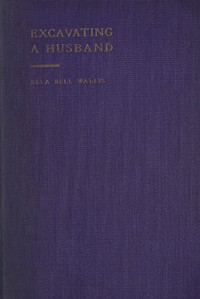
Excavating a Husband — Themes and Context
(0 User reviews)
79
Project Gutenberg
2018
Not confirmed
Single women -- Fiction; Siblings -- Fiction; Older people -- Fiction; Identity -- Fiction; Treasure hunting -- Fiction
Readers of public-domain and historical texts
Project Gutenberg digital edition
en
Edition facts
Words
17,932
Reading time
78 min
Text sections
2
The catalog record for Excavating a Husband — Themes and Context provides practical reading context through 17,932 words, 1 hr 18 min estimated reading time, and 2 detected text sections.
The text analysis averages about 16.8 words per sentence, while the detected sections provide another way to judge how the source is divided.
Project Gutenberg metadata also associates the work with “Single women -- Fiction,” connecting these edition facts with the source record’s subject description.
Source:
Project Gutenberg record #57975
In this 1916 novel, fifty-year-old Katherine Boulby's eclectic self-education and romantic notions collide with her brother Joseph's literal-mindedness when a buried gold coin sparks a treasure hunt, revealing the gap between bookish ideals and practical realities.
Editorial Edition Score
4.5/5
★★★★★
★★★★★
Calculated from edition completeness, EPUB availability, text structure and catalogue metadata. Not a user rating.
How this score is calculated
- Description quality20 pts
- Title & short description10 pts
- Source metadata20 pts
- Text length15 pts
- Chapters / structure15 pts
- EPUB file integrity20 pts
Total of 100 points, scaled to a 2.5-5.0 range. Editions with an empty description or a missing EPUB file are not scored.
Edition quality
Public-domain source text
Read the source text
The source text is kept in the dedicated reader, separate from this catalogue record and its commentary.
The narrator introduces Katherine Boulby as a woman who has reached her fiftieth year in 'single blessedness,' yet her life is not one of perfect calm, for she lives with her brother Joseph. Katherine's chief aim is mental culture, pursued with 'rare, child-like enthusiasm' rather than methodical study. She flits from romantic prose to astrology to architecture, dealing in 'interesting and easy generalities.' The narrator insists she is no blue-stocking but a charming person whose hobbyism never becomes abstruse. This playful, ironic tone—the narrator admits Katherine may be 'inextricably lost' in the labyrinth of learning—sets up a story less about actual excavation than about the comic friction between romantic ideals and mundane reality.
The Narrator's Ironic Voice
The opening paragraphs establish a distinctive narrative stance: the speaker is both affectionate and gently mocking toward Katherine. Phrases like 'it is far from my purpose to represent my heroine as a blue-stocking' and 'she never sought to find herself' create a knowing, almost conspiratorial tone. The narrator claims Katherine possesses 'good, sound, common sense' but then undercuts it by describing her as 'inextricably lost' in her studies. This irony extends to the brother Joseph, who is 'a quiet, fairly pliant man'—a description that proves ironic when he later discovers gold and becomes secretive. The narrator's voice is the book's most consistent feature, shaping how we interpret every character's actions.
The Treasure Hunt as Comic Engine
The discovery of a gold coin while Joseph is spading ground for currant bushes triggers a chain of comic events. Joseph, who 'had no strategy in his nature,' immediately suspects the neighbor boy Willie Brown has seen the coin and will 'tell all the rest of the boys.' Katherine, in turn, declares 'I know boys' and insists they wait until night to dig. Willie, however, quickly deduces the secret and rallies his 'Faithful Band.' The treasure hunt is not a serious adventure but a parody of one: the adults are comically paranoid, the boy is stereotypically mischievous, and the gold piece may or may not lead to a larger hoard. The excerpt leaves the outcome uncertain, focusing instead on the humorous misunderstandings.
Bookish Ideals vs. Practical Reality
A key contrast emerges between Katherine's romanticized view of life and the mundane world around her. She believes in 'daring,' 'picturesque,' and 'romantic' qualities she has read about in books. Meanwhile, Mr. Murphy, a male character, muses on how to embody these traits: 'I’ll be darned what a plain, sober, God-fearing man can do to be it and keep the respect of his mates.' His monologue reveals the gap between literary ideals and everyday life. Katherine's library contains models like Captain Kidd, but Mr. Murphy doubts he can emulate a pirate's whiskers. This tension—between the allure of bookish romance and the limitations of real people—runs through the excerpts, suggesting the novel will explore how characters try (and fail) to live up to fictional standards.
The excerpts offer a comedy of mismatched expectations: Katherine's intellectual flights, Joseph's literal-mindedness, and Mr. Murphy's earnest attempt to become 'romantic' all collide around a buried coin. Readers should attend to the narrator's wry commentary and the way each character interprets the same event through their own lens. The treasure may be real or imagined, but the real discovery is how people construct stories about themselves and others.
Katherine’s buried coin and her brother’s blunt shovel always remind me of another restless heart, Sally, who tried to tame a houseful of orphans with sheer will. Both women discover that life’s real treasure isn’t found in romantic ideals but in the messy, daily tending of others. That quieter truth lingers long after the last page turns, like dust settling in afternoon light. See Dear Enemy — Background and Themes for a companion’s echo of that same lesson.
There are no reviews for this eBook.
There are no comments for this eBook.
Reader reflection
Take a moment to reflect on this book
Create a short personal record of your experience with this book.
Your progress
0
/
10
2
How did the book work for you overall?
3
Would you encourage someone else to read it?
4
How much effort did this book require?
5
Did the story or argument move comfortably?
6
How understandable was the text?
7
Did anything about the book feel genuinely new?
8
Would you read this book again?
9
What changed or sharpened your thinking?
10